Health economics and occupational therapy

I attended the Australian Occupational Therapy Conference last week, for the first time in nearly 15 years! I went to support some OT’s I’ve been working with on an economic evaluation, but it was lovely to catch up with friends and colleagues from my OT life before health economics. I also realised there wasn’t much health economics at the conference, and I got a few requests for some introductory resources about health economics. So, I’ve put together a brief summary of what health economics is and how it could apply to occupational therapy.

In general, health economics is about how we allocate our scarce health resources to maximise our health outcomes. There can be a misconception that economics is about cutting costs. But health economics is really about value, and therefore the benefits that can be achieved are just as important to a health economist as the costs of achieving them.

Everyone uses economic thinking in their daily lives – I recently bought a new laptop and had to work out which aspects of performance I would prioritise (memory, touch screen, processing power) to get a laptop within my budget (my constrained resources). For some great examples of how economic theory plays out in real life then I highly recommend the Freakonomics podcast! There are some episodes specific to health, such as Are you ready for a glorious sunset and How many Doctors does it take to start a healthcare revolution and How do we know what really works in healthcare, but all the episodes will teach you to think like an economist.

For a more formal reading, there is a paper by Kernick (2003) Introduction to health economics for the medical practitioner that gives a nice introduction to health economics, and the types of questions that health economists try to answer. If you want a bit more about some important economic concepts such as opportunity costs and marginal costs, then Goodacre & McCabe’s (2002) An introduction to economic evaluation and this Sanofi factsheet (2009) on What is health economics are other good resources.

You will notice that these papers talk in general about health economics, and then go straight into a discussion of economic evaluation. Economic evaluation is probably the most common method associated with health economics and is used world-wide (including by the PBS and MBS in Australia) to evaluate the cost-effectiveness of new interventions. An economic evaluation compares two (or more) interventions in terms of both the costs and the benefits.  Economic evaluations are typically trial-based (meaning they are embedded in a clinical trial) or modelled (meaning they are based on research from the literature), or a combination of both.

The previously mentioned readings are good introductions to economic evaluations, and also explain the difference between a cost-benefit, cost-effectiveness and cost-utility analysis. These terms are often used interchangeably, but in health economics they have specific meanings based on the outcome measure you are using.

If you’re interested in how you actually incorporate an economic evaluation into a clinical trial, then the factsheet Step by step guide to economic evaluation in cancer trials gives a guide and walks through an example (it is designed for cancer clinical trials, but the same steps would apply to an occupational therapy trial). If you want more detail then I would suggest the textbooks by Gray et al Applied methods of cost effectiveness in health care or Drummond et al Methods for the economic evaluation of health care programmes.

But… health economics is much more than economic evaluations. Health economists are interested in questions like: what influences health (other than healthcare), what is ‘health’ and how do we value it, how can we arrange the health workforce most efficiently, how does the way we pay doctors change their performance, how can we make health more equitable, and many more (see Alan William’s famous ‘Plumbing Diagram‘). Some of the questions I am using economic approaches to answer include:

  • How do we quantitatively measure patient preferences for health and health care (using discrete choice experiments)?
  • What aspects of quality of life are people with cancer willing to give up to increase their survival?
  • How long does it take people to return to work after a cancer diagnosis and treatment, and what makes it easier for them to do so?
  • When people stop working because of illness or injury, how can we measure the impact this has on the broader economy?
  • How do the costs of cancer treatment impact peoples emotional and physical well-being?

There are many opportunities for health economics to be used in occupational therapy, and I’ve included a list of examples at the end of this article. But three obvious areas would be: a) Economic evaluations, although a systematic review of economic evaluations in occupational therapy (Green & Lambert 2016) found only nine published economic evaluations (of varying quality), despite the increasing focus of health care systems on demonstrating cost effectiveness; b) Many occupational therapy interventions probably reduce future health resource use, so there are opportunities to use Medicare data (such as MBS and PBS payments) to examine the impact of occupational therapy (here is a good fact sheet on using Medicare data for research); and c) Discrete choice experiments (which quantitatively measure patient preferences) are an ideal method to examine people’s preferences for their health (e.g. which occupational domains they value most) and how they want their treatment delivered (e.g. what aspects of a rehab program make people most likely to adhere to a practice schedule).

Please feel free to get in touch if you have ideas or an interest in incorporating health economics into occupational therapy, of if there are other resources you’d like, or have found useful!

Examples of health economics in occupational therapy:

  • Hewitt et al (2018) An economic evaluation of the SUNBEAM programme: a falls-prevention randomized controlled trial in residential aged care [Link]
  • Kareem Brusco et al (2014) Are weekend inpatient rehabilitation services value for money? An economic evaluation alongside a randomized controlled trial with a 30 day follow up [Link]
  • Wales et al (2018). A trial based economic evaluation of occupational therapy discharge planning for older adults: the HOME randomized trial [Link]
  • Sampson et al (2014) An introduction to economic evaluation in occupational therapy: Cost-effectiveness of pre-discharge home visits after stroke [Link]
  • Laver et al (2012) Preferences for rehabilitation service delivery: A comparison of the views of patients, occupational therapists and other rehabilitation clinicians using a discrete choice experiment [Link]
  • Gallego et al (2018) Carers’ preferences for the delivery of therapy services for people with disability in rural Australia: evidence from a discrete choice experiment [Link]
5 great quotes from the Women in Economics Retreat

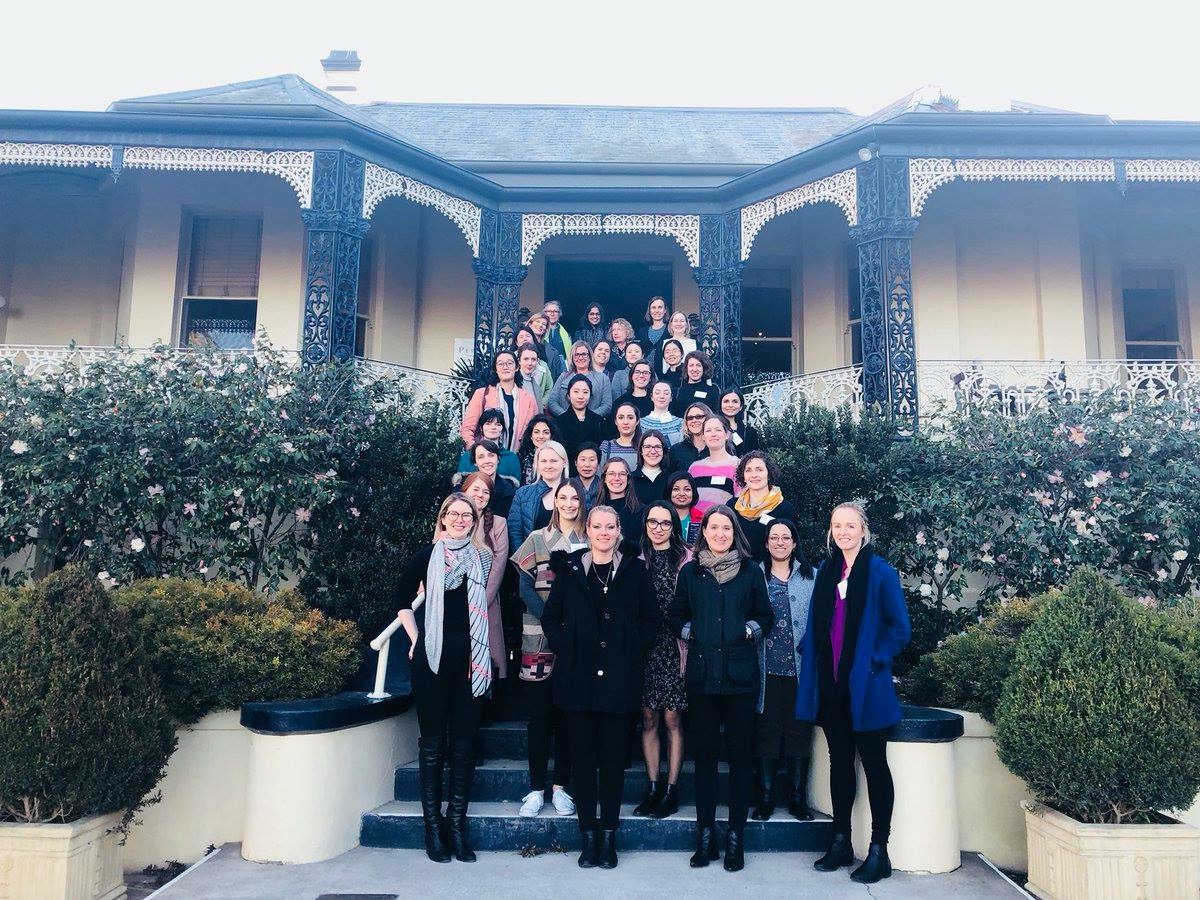
Last week I attended the 2018 Women in Economics Retreat, organised by the Economics Society of Australia Women in Economics Network. It was 2 days in the Southern Highlands with a wonderful group of early and mid-career researchers, led by an amazing selection of mentors.

The attendees worked in a broad range of economics roles, including academia, government and consulting, and came from lots of different backgrounds (lots of closet architects among female economists apparently!) It was fascinating to hear how despite the varied ways we were all using economics, many of us faced the same issues.

I learnt a lot, met great people and came away inspired. Here are 5 great quotes I heard at the retreat, and why they resonated with me:

  1. “Only 13% of economics professors are female … and … 9% of economists or analysts quoted in print media articles are female”. I come from a health background, and work in a centre led by fabulous female role models. These statistics highlight that my experience is not typical in economics, and something really needs to change. I’ll be taking small steps to try to increase the visibility of female economists in my circles.
  2. “Everything is potentially really interesting”. We were talking about the value of having a growth mindset in the workplace, and I really liked the idea that there are opportunities all around us, if we can just adapt our mindset. Just because you don’t like a topic, doesn’t mean you can’t enjoy and learn from the methodology, or the team members, or something else about a project.
  3. In the spirit of Tony Jones, I’ll take that as a comment”. Day 2 saw us learning about Communicating with Influence. Rather than the standard media engagement strategies, this was practical advice given by the mentors. This quote was my favourite tip – about how to respond to that typical inappropriate / rambling / self-promoting interrupter in a seminar or conference presentation. I love that it (politely) puts the questioner in their place, while using the cultural reference to Q&A to keep it light and relax the audience. Hopefully I’ll never have to use it, but I feel more confident knowing I’ve got it up my sleeve!
  4. “Done is the engine of more”. As someone who tends toward perfectionism, I’m a big fan of the mantra “Finished, not perfect” as a way to move myself on from tasks which don’t need to be perfect, but do need to be finished. I really like this alternative version because it highlights the benefits of finishing – not only do you get the task you’re working on done, but you can then accomplish more. I’ve printed this and put it on my office wall as a reminder!
  5. “Distract daily, withdraw weekly, abandon annually”. The last session of the retreat was on work/life balance. This was fabulous, with practical and helpful ideas for everyone. Scheduling time to get away from work on a daily, weekly and annual basis makes so much sense, and it was fun and informative to hear how other people do this for themselves (and also really nice to know that I’m not alone in finding balance difficult to achieve!)

There was so much more that I learnt at the retreat, from stress coping styles to becoming good media talent, and from apps to encourage women to ask questions in conference sessions (Whova) to the importance of keeping a positive feedback log. One final thing I wanted to share was the various book recommendations that were suggested at different times over the weekend  – I’ve listed them below.

I would highly recommend the retreat to anyone looking to develop a network of fantastic female economists, or who feels a bit stuck in their career and is wondering what their next move is. Congratulations to the Women in Economics Network for putting on such a great event.

WEN Retreat Recommended Reading List


2018 Women in Economics Retreat (photo credit: Leonora Risse on the Women in Economics Australia Facebook page).

Our respondents didn’t understand these questions – do you?

Dr Alison Pearce has won a Best Poster Presentation Award at the Health Economics Study Group Winter Meeting 2016 (HESG) held in Manchester in January 2016. The award was given for Alison’s poster “Our respondents didn’t understand these questions – do you? Cognitive interviewing highlights unanticipated decision making in a discrete choice experiment.”

The poster described 17 interviews Alison conducted with cancer survivors about their care after finishing cancer treatment. During the interviews each survivor completed a survey about their care, but many found it very difficult.  Some of the problems with the survey are explained on the poster, but the poster was also interactive – conference attendees were asked to vote and comment on the survey questions. The poster received a great response, with many conference attendees voting and leaving comments about the research.

The National Cancer Registry is leading this research into cancer survivorship with a group of collaborators from Aberdeen, Dublin and Newcastle, with the aim of informing policy about the best way to structure follow-up services for survivors who have completed their cancer treatment. The Health Economics Study Group supports and promotes the work of health economists and is the oldest and one of the largest of its type.

This news article was originally posted on the 26th of January 2016 on the National Cancer Registry Ireland website: http://www.ncri.ie/news/article/registry-health-economist-wins-best-poster-presentation-award-recent-conference

ISPOR Best New Investigator Award

Dr Alison Pearce has won a Best New Investigator Presentation Award at the Annual European Congress of the International Society for Pharmacoeconomics and Outcomes Research (ISPOR). The award recognises the scientific merit of a podium presentation at the conference, which was held in Milan, Italy.

The award was given for Alison’s work which found that lost productivity due to cancer in Brazil, Russia, India, China and South Africa costs around $47 billion US dollars annually.

When people die from cancer, their contribution to society through paid work, called productivity, is lost. Over 70% of cancer deaths in the world occur in developing countries, and Brazil, Russia, India, China and South Africa (the BRICS countries) are the most rapidly developing economies in the world. The results highlight the importance of tobacco control, vaccination for hepatitis, and improved access to early detection and treatment in developing countries.

The National Cancer Registry is leading this research with a group of collaborators from around the world, including the International Agency for Research on Cancer (IARC) in France and researchers in Ireland, the UK, Brazil, Russia, India, China and South Africa. ISPOR is a non-profit, international, educational and scientific organisation that promotes health economics and outcomes research excellence to improve decision making for health globally.

This news item was originally published on the National Cancer Registry Ireland website: http://www.ncri.ie/news/article/dr-alison-pearce-health-economist-registry-wins-prestigious-conference-award 

Research on the costs of cancer to be presented at an international conference in India

Cancer deaths in Brazil, Russia, India, China and South Africa (the largest emerging economies in the world) result in over $51 billion (USD) in lost productivity each year. These results are being presented at an international conference in India today.

Researchers at the National Cancer Registry Ireland (NCRI) have estimated that lost productivity due to cancer deaths costs China over $28 billion each year, followed by India ($6.7 billion), Russia ($5 billion), Brazil ($4.6 billion) and finally South Africa ($2.8 billion) each year.

When people die due to cancer, their contribution to society through paid work, called productivity, is lost. Over 70% of cancer deaths in the world occur in developing countries, and Brazil, Russia, India, China and South Africa (together known as the BRICS countries) are the most rapidly emerging economies in the world. Leading an international collaboration of researchers, the NCRI have been investigating productivity loss in the BRICS countries.

The analysis shows cancers related to tobacco contribute between 27% (South Africa) and 38% (India) of productivity losses across the BRICS countries. Over half of men in Russia and India smoke, and it is clear that anti-tobacco legislation is an important part of cancer control in the BRICS countries.

The analysis also shows the potential importance of vaccinations for hepatitis and HPV in BRICS countries. Cancers such as liver cancer, cervical cancer and head and neck cancers are all preventable with these vaccinations, but continue to have a high impact on lost productivity in BRICS countries.

These results are being presented today at the annual conference of theInternational Association of Cancer Registries (IACR). The conference is being held in Mumbai, India, and aims to provide people working in cancer registries with a forum for learning and exchanging ideas. The work has been done with a group of international collaborators, including from the International Agency for Research on Cancer (IARC) in France, and researchers in Ireland, the UK, Brazil, Russia, India and China.

This news item was originally published on the National Cancer Registry Ireland website: http://www.ncri.ie/news/article/registry-research-costs-cancer-be-presented-international-conference-india

ISPOR 2013 Posters

I am attending the International Society for Pharmacoeconomics and Outcomes Research (ISPOR) conference in Dublin on the 2nd to the 6th of November. As part of this I am presenting two posters related to my PhD.

1. Can administrative data predict chemotherapy adverse events?

2. Australian standard costs and consequences of four chemotherapy adverse events.

As well as these being available at the conference and on the ISPOR website, I am making these available here via QR code.

If you are interested in the posters please feel free to get in touch, or if you are the conference come and say hi during the poster discussion hour on Monday evening.