Blog

Best Health Services and Policy Research Papers – 2018 Award winner

I was thrilled to be awarded the Overall winner of the 2018 HSRAANZ Best Health Services and Policy Research Paper last night. These awards recognise the best scientific works in the field health services and policy research. The award was for my paper on cancer-related lost productivity in the developing countries Brazil, Russia, India, China and South Africa (see my blog post for more details).

The article impressed the judges in the scope of research undertaken and the value it will contribute to the research field, including its potential to guide local prevention and treatment strategies. (HSRAANZ)

For the paper I was responsible for leading a large, international team of researchers to conduct an analysis of productivity loss due to cancer in rapidly developing countries. I had a leading role in the conceptualisation of both the research question and the project methodology, and applied for and received funding through an EU CANWON fellowship to undertake the project. I gathered the necessary data with assistance from the international authors, and was solely responsible for the formal data analysis. As the lead author, I was also responsible for the project administration and preparation of the manuscript.

Following publication of the paper, I lead the promotion of the publication through various media channels, including The Conversation (~6,000 readers) and 44 radio, print and tv news articles (including The Guardian, Lancet Oncology News, UN News, 2SER ThinkHealth podcast, etc.) As a result, the article has gone on to be in the top 5% of all research outputs scored by Altmetrics, and the number 1 article of similar age published in Cancer Epidemiology. More importantly, I have worked with each of the international authors to ensure that the results have been disseminated to the appropriate policy and health service planning agencies and individuals in each of the BRICS countries. This has included developing country-specific specific results and graphs, assisting with presentation slides and encouraging broad dissemination lead by the other authors.

The above two paragraphs are a summary of the application I submitted to HSRAANZ for the award, and while it is true it skips the importance of this paper as part of my professional development. I was so lucky to be supported by Linda Sharp, Isabelle Soerjomataram and Paul Hanly to lead the research, and to apply for and take up funding to visit IARC and get the project started. The team we pulled together were really engaged with the project, and instrumental in pulling together and then interpreting the local and international data. I now count them as ongoing collaborators, and we already have a few papers and grant applications in the works.

But perhaps the most important lesson from this paper was resilience. I was so proud of this work once it was finished, but it took more than 12 months, an international relocation and 7 journal rejections before it was published. During that year I learnt perseverance and the value of a few days ‘cooling off’ before commencing the reformatting process, as well as how wonderful it is to have co-authors who will keep the faith in the manuscript alive when you (temporarily) run out! So thank you to everyone who helped out on the paper in whatever way – from digging out local data to offering supportive glasses of wine after another rejection! It was all worth it.

Cancer is about more than health: work and leisure after cancer

This is a guest blogpost by Marjon Faaij, who I was delighted to supervise for her Master of Pharmacy research project.  We made a great team – Marjon had a personal interest in the impact of cancer on daily life, and I had access to some data about cancer survivorship through the PROFILES registry. Even better, because Marjon was from Utrech University, she could translate the Dutch PROFILES data much more easily than I could! Marjon presented the results of her research at the NCRI conference in the UK, and we are now writing them up as a publication. In the meantime, Marjon put together this summary, and was kind enough to let me share it here.

In 2005, I lost my mother due to cancer. Before she died, she was sick for almost three years. During this period, cancer had a big impact on her daily life. Shortly after the diagnosis of cancer she could still do everything she liked; working in the hospital as a nurse, taking care of her family, cleaning our house, giving music lessons and swim lessons and socialising with friends and family. But as the time after the diagnosis increased, she became sicker, she had more pain and was more tired. She did not have the energy to do all the things she liked. She decided to work less hours until she stopped working completely. She used this time to spend more time with us and to rest more.

A lot of different factors influenced her decisions about doing work, unpaid work and leisure. One of the most important factors for her was the support from family and friends, but I can imagine that it will be different for each cancer patient.

Therefore, I decided to do a research project about the different factors of influence on cancer survivors doing daily activities, for my Master of Pharmacy. For this research I used surveys of Dutch cancer survivors, including people with Hodgkin lymphoma, non-Hodgkin’s lymphoma, multiple myeloma, thyroid or prostate cancer.

Factors of influence

From my results it is clear that cancer survivors are less likely to do paid work, and those who do work are likely to work fewer hours. Cancer survivors are also more limited in their unpaid work and leisure. However, how much cancer influences each activity is dependent on cancer type. Each cancer type has different symptoms, and has different treatments, which leads to different influence on doing daily activities.

Consistent to my mother, most cancer survivors try to keep working and fully participate in leisure and unpaid work activities. However, if they become sicker it is harder to fully participate in these activities. When they are limited in one area, they appear to be limited in all activities.

There are a lot of factors that have influence on doing daily activities. For example:

–         People were less likely to have a paid job if they were: female, had surgery, older, widowed or had multiple comorbidities.

–         People were more likely to be limited in their unpaid work if they had: non-Hodgkin lymphoma or multiple myeloma, multiple comorbidities, were female, or were never married.

–         People were more limited in their leisure activities if they had: medium education or multiple comorbidities.

It was interesting that people who received more follow-up services were no more or less likely to report difficulty with paid work, unpaid work or leisure. But people who felt satisfied with the follow-up care they received had an increased chance of participating in daily activities.

What does this mean?

These results show that there are many factors of influence on daily activities. The factors are unique for each cancer survivor, and so are the impacts. It is important for patients to know that changes can take place across all of their daily activities during cancer, so they can prepare for and react to these changes.

Doctors need to know that cancer and its treatment can influence patients’ daily activities, and that these changes can be important for quality of life. Discussing these changes with patients and providing support and referral to services that can assist patients (and their families) during this difficult time. These referrals are not possible if there is nowhere to refer patients to, and so health care systems need to ensure that services like work rehabilitation, occupational therapy and palliative care are available and appropriately funded.

Finally, the results are important for health economics. Economic evaluation using a societal perspective account for  changes in paid work due to illness (known as lost productivity) but the contribution of unpaid work usually goes unaccounted for. From these results it is clear that cancer has a big impact on both paid and unpaid work, and thus both should be considered in economic evaluations taking a societal perspective.

This research, cancer is about more than health – work and leisure after cancer, is based on data of the PROFILES Registry. This research project is carried out by Marjon Faaij. She is a Dutch Master of Pharmacy student from Utrecht University. This research project has been done at the Centre for Health Economics Research and Evaluation at the University of Technology Sydney, under the supervision of Alison Pearce and in collaboration with Dounya Schoormans of the PROFILES Registry.

1 in 5 people with cancer report financial difficulties

More than 20% of people with cancer in the Netherlands report financial difficulties as a result of their cancer care. If they are unemployed, this goes up to over 25%, as found in a paper published today in the Journal of Cancer Survivorship.

Dr Alison Pearce, the lead author on the study explains “People often think about the extra costs of cancer care putting financial strain on patients and their families. We were interested in whether having difficulties maintaining a job during cancer treatment might also impact people’s financial worries.”

Financial difficulties were also more common for men, young people, people who weren’t married, and people who had lower education or socioeconomic status. For many people in these groups, financial reserves and flexibility might be limited. For example, young people may not have had time to save money for situations like this, or people working casual jobs might have lower income as well as less access to sick leave.

Professor Dr Lonneke van de Poll-Franse from the PROFILES registry that provided the data: “Although in the Netherlands, like Australia, we have a good social security system to pay for cancer treatment and disability, people still experience financial difficulties. More attention should be paid to the potential origins of this problem, for example maintaining employment, getting a mortgage or insurance or missing out on work-related financial bonusses.”

Some types of cancer were more likely to result in financial difficulties. People who had blood cancer or colorectal cancer were more likely to feel stress due to the costs of cancer, while people with a type of skin cancer called Basal Cell Carcinoma were less likely to experience financial stress.  This may reflect the duration and complexity of treatment for different cancers.

Just like the physical side effects of treatment reduce after stopping treatment, the chances of financial difficulties also reduced over time.

Dr Pearce says “This is probably related to people going back to work. But, we know financial difficulties reduce quality of life. So, it would be better if we could help people to avoid or minimise financial problems, rather than just waiting for them to go away.”

Introducing return to work programs for cancer survivors might be one way to prevent or reduce financial difficulties among cancer survivors. Research suggest that multidisciplinary teams involving physical therapy, psychological support and workplace specific training have been effective in helping people return to work.


Link to paper: A Pearce, B Tomalin, B Kaambwa, N Horevoorts, S Duijts, F Mols, L van de Poll-Franse, B Koczwara. Financial toxicity is more than costs of care: The relationship between employment and financial toxicity in long-term cancer survivors. Journal of Cancer Survivorship. Published online 24th October 2018.

About the authors: This research was conducted by a collaborative group, with researchers from the University of Technology Sydney, Flinders University, the Netherlands Comprehensive Cancer Organisation, the University Medical Center Groningen, and Tilburg University.

About PROFILES: PROFILES (Patient Reported Outcomes Following Initial treatment and Long-term Evaluation of Survivorship) is a registry for the study of the physical and psychosocial impact of cancer and its treatment from a dynamic, growing population-based cohort of both short and long-term cancer survivors. Researchers from the Netherlands Comprehensive Cancer Organisation and Tilburg University in Tilburg, The Netherlands, work together with medical specialists from national hospitals in order to setup different PROFILES studies, collect the necessary data, and present the results in scientific journals and (inter)national conferences.

For more information contact:

Alison Pearce: Alison.pearce@chere.uts.edu.au

My experience of mentoring

I have been asked a few times recently to give presentations on my experience of mentoring as an early career researcher. I have been lucky to have had a number of formal and informal mentoring experiences over the last 10 years, and some have been more successful than others.

Business Idea, Planning, Business Plan

I’ve been mentored by bosses, colleagues and friends of friends. One of the most influential arrangements has been the HSRAANZ mentoring scheme, which I’ve participated in twice: first as a PhD student who was close to finishing but didn’t know what to do next, and more recently as an early career researcher wondering how to become a mid-career researcher. In both cases I was paired with a senior health economist in a different organisation and different area of health economics to myself, but both were very experienced academics with valuable advice.

Being mentored as a PhD student. I had taken a number of sideways steps into health economics, so didn’t feel like I was on a clear career path. In particular, my main interest was oncology, but everyone around me seemed to specialise in a methodology rather than a clinical area and I wasn’t sure what I should do next. I sent my CV to my mentor and we had a long and broad discussion of my options and the various opportunities available to me. He asked about my wishlist for the next 5 years and, having heard it, suggested that to get everything on it I should probably look overseas. I’m so glad he did, because I got my dream postdoctoral fellowship in the health economics of cancer at the National Cancer Registry in Ireland. My mentor and I only had that one (long) conversation, but it changed my life!

Being mentored as a postdoc. I reapplied for a mentor through HSRAANZ half way through my second postdoc. I was wondering how to move from being an early career researcher ‘with potential’ to being a mid-career research with demonstrated value. This relationship was structured differently, with a series of wide ranging chats over monthly coffee meetings. I found it really helpful to get a fresh perspective on what being a mid-career researcher looked like, and types of roles and responsibilities I should be aiming for. It was also great to have another set of eyes looking out for opportunities that might be valuable, and to introduce me to a wider network.

As part of my postdoc I also get mentoring with two (very) senior UTS academics. Although they are from outside my field, they are excellent at explaining the politics of the university system and academia more generally. They have given me a fresh perspective on strategic career planning and how to package my research for impact and a more general audience.

Most helpful aspects of being mentored: In both the HSRAANZ mentoring scheme and my other mentoring experiences, being able to talk to someone about the big picture has been invaluable. In particular, talking to someone outside my organisation, so they weren’t constrained to what else was happening in the office (e.g. what projects are coming up, the development needs of other people, etc.). Hearing how things work in different organisations was also great, as I’ve had limited exposure to different academic environments. And finally, having another set of yes to look out for opportunities for me, but also to be able to review grant application, look for gaps in my CV and give me fresh feedback has been fabulous.

Top tips to make the most of being mentored:

  1. Push your mentor to make sure meetings happen. In almost all my mentoring experiences I’ve had to be proactive. My mentors are senior academics, which means they are busy. So be organised – set meeting times with calendar invites, organise a room/cafe/teleconference line, send an agenda prior to the meeting, etc.
  2. Use your CV as a starting point for the first meeting. Send an updated CV to your mentor at least a week before the meeting and ask them to review it. Then use the meeting time to go over it and get feedback on the strengths and weaknesses they perceive, and how they would see you as a job applicant. Then as they get to know you they can give advice on how to adjust your CV to reflect your true skills and knowledge, and also be on the look out for opportunities to fill in gaps or show off your strengths.
  3. Be honest, so that you can get the most out of them. Although it is easy to fall into the trap of trying to impress them, you actually want them to give you advice for the real you – even if that means you’re unorganised, un-confident and/or unsure what you’re doing.
  4. Have a defined question you want to work through with them. Even if it is a big one (what should I do after my PhD!) this gives structure to the relationship, and also helps you identify when you’ve achieved your goal.

Being mentored has given me a broader perspective, a wider network of contacts and access to different resources and opportunities. I will continue to seek mentoring throughout my career, and am delighted to have the opportunity to now be a mentor to an early career researcher through the HSRAANZ scheme.


Mentoring resources

Treating anxiety in people with cancer could save the health system money

It is normal to experience distress after a cancer diagnosis, but for some people distress can become so severe it affects a person’s mental health. We found that people who have anxiety as well as cancer often cost the health system more, particularly when anxiety is undiagnosed and untreated.

Cancer patients with clinical levels of anxiety often cost the health care system more. This is because they often use more health resources, such as having more tests, or staying longer in hospital. While some of these extra resources might be to treat their anxiety, many are for physical complaints, and are incurred even when the anxiety has not been formally diagnosed.

For example, one study found that men with prostate cancer tended to opt for more intensive treatment if they had anxiety. Similarly, women with breast cancer were likely to stay in hospital longer, and have more complications, if they had a psychiatric disorder like anxiety. These extra days in hospital and treatment for complications meant their care cost the health care system an extra 13%. Similar results were seen for colon, cervical, head and neck cancers.

Given that more than 1 in 3 Australians will be diagnosed with cancer during their lifetime, finding ways to make cancer treatment more effective and more efficient is critical. Health services that improve the psychological support available to cancer patients could have long term cost savings, as well as providing improved patient care.

Despite how common clinical anxiety is, this review identified only five studies that looked at the costs of anxiety in people with cancer. Four were from Canada and the USA, and one was done in Germany.

Unsurprisingly, the studies that looked at treatments for anxiety found that health care use increased in the short term – often because patients accessed mental health support services. This meant that providing support for anxiety looked more expensive than standard care. However, no-one has looked at whether reducing anxiety among cancer survivors could reduce costs in the long term.

While most people diagnosed with cancer will experience distress, this is a normal reaction to a traumatic life event. However, at least 10% of people with cancer will have clinical levels of anxiety after their diagnosis. Young people, women and people with advanced cancer are particularly at risk. This anxiety can lead to feelings of fear, loss of control and avoidance, as well as physical symptoms such as poor sleep, headaches, and fatigue.

Even though there are effective treatments for anxiety, in the midst of cancer care, anxiety often goes undetected and untreated. One reason for this is that the physical symptoms of anxiety, such as, headache or stomach upsets are often attributed to non-mental health causes. Without appropriate treatment, anxiety can impair decision making and coping. It can also lead to poorer psychological and medical outcomes, including more side effects and poor treatment compliance.

The management of anxiety disorders in the cancer context is a clear example of where the evidence base for relatively low cost and effective methods for identification and treatment is available, yet not systematically implemented.

The full paper is available here: Joanne Shaw, Alison Pearce, Anna-Lena Lopez, Melanie Price. Clinical anxiety disorders in the context of cancer: A scoping review of impact on resource use and healthcare costs. European Journal of Cancer Care.  https://onlinelibrary.wiley.com/doi/abs/10.1111/ecc.12893. Thanks to Jo Shaw for help writing this blog post.

5 great quotes from the Women in Economics Retreat

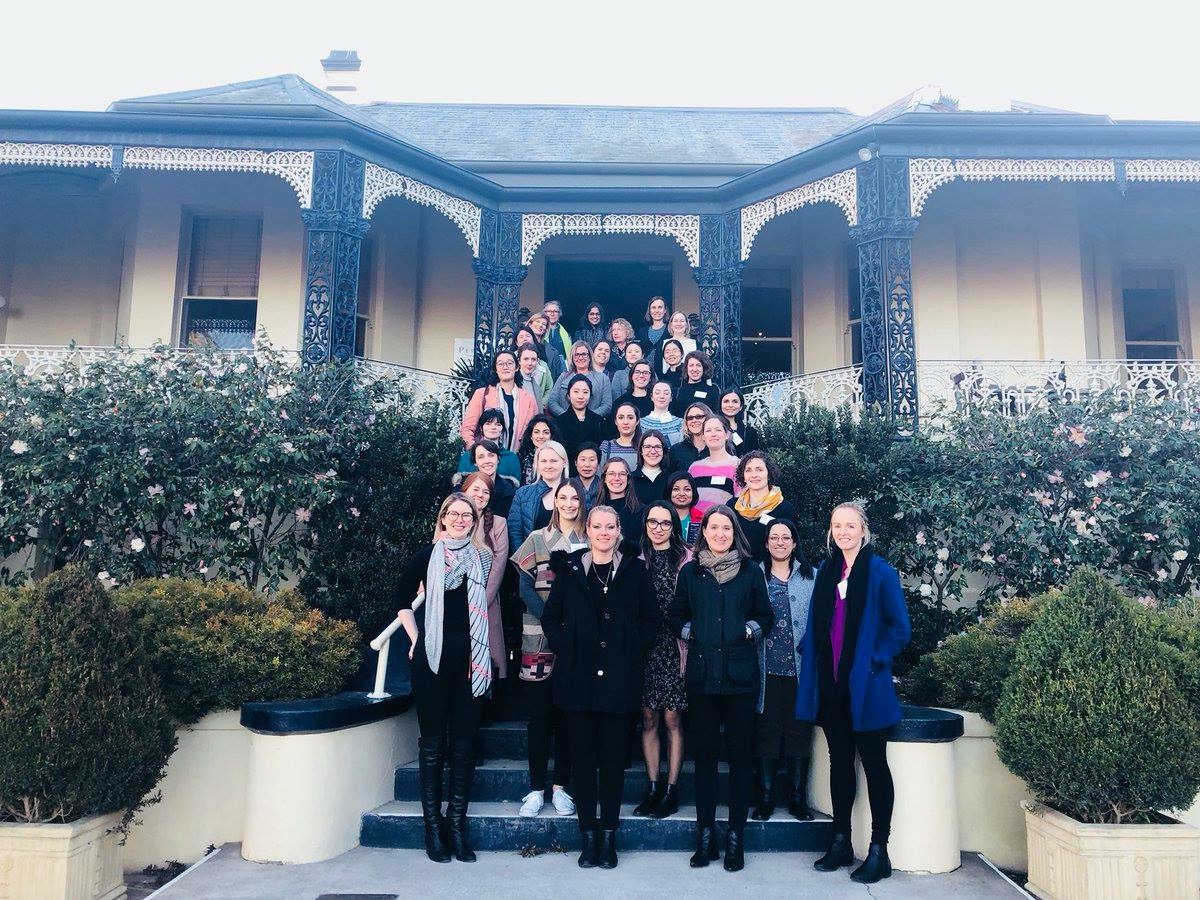
Last week I attended the 2018 Women in Economics Retreat, organised by the Economics Society of Australia Women in Economics Network. It was 2 days in the Southern Highlands with a wonderful group of early and mid-career researchers, led by an amazing selection of mentors.

The attendees worked in a broad range of economics roles, including academia, government and consulting, and came from lots of different backgrounds (lots of closet architects among female economists apparently!) It was fascinating to hear how despite the varied ways we were all using economics, many of us faced the same issues.

I learnt a lot, met great people and came away inspired. Here are 5 great quotes I heard at the retreat, and why they resonated with me:

  1. “Only 13% of economics professors are female … and … 9% of economists or analysts quoted in print media articles are female”. I come from a health background, and work in a centre led by fabulous female role models. These statistics highlight that my experience is not typical in economics, and something really needs to change. I’ll be taking small steps to try to increase the visibility of female economists in my circles.
  2. “Everything is potentially really interesting”. We were talking about the value of having a growth mindset in the workplace, and I really liked the idea that there are opportunities all around us, if we can just adapt our mindset. Just because you don’t like a topic, doesn’t mean you can’t enjoy and learn from the methodology, or the team members, or something else about a project.
  3. In the spirit of Tony Jones, I’ll take that as a comment”. Day 2 saw us learning about Communicating with Influence. Rather than the standard media engagement strategies, this was practical advice given by the mentors. This quote was my favourite tip – about how to respond to that typical inappropriate / rambling / self-promoting interrupter in a seminar or conference presentation. I love that it (politely) puts the questioner in their place, while using the cultural reference to Q&A to keep it light and relax the audience. Hopefully I’ll never have to use it, but I feel more confident knowing I’ve got it up my sleeve!
  4. “Done is the engine of more”. As someone who tends toward perfectionism, I’m a big fan of the mantra “Finished, not perfect” as a way to move myself on from tasks which don’t need to be perfect, but do need to be finished. I really like this alternative version because it highlights the benefits of finishing – not only do you get the task you’re working on done, but you can then accomplish more. I’ve printed this and put it on my office wall as a reminder!
  5. “Distract daily, withdraw weekly, abandon annually”. The last session of the retreat was on work/life balance. This was fabulous, with practical and helpful ideas for everyone. Scheduling time to get away from work on a daily, weekly and annual basis makes so much sense, and it was fun and informative to hear how other people do this for themselves (and also really nice to know that I’m not alone in finding balance difficult to achieve!)

There was so much more that I learnt at the retreat, from stress coping styles to becoming good media talent, and from apps to encourage women to ask questions in conference sessions (Whova) to the importance of keeping a positive feedback log. One final thing I wanted to share was the various book recommendations that were suggested at different times over the weekend  – I’ve listed them below.

I would highly recommend the retreat to anyone looking to develop a network of fantastic female economists, or who feels a bit stuck in their career and is wondering what their next move is. Congratulations to the Women in Economics Network for putting on such a great event.

WEN Retreat Recommended Reading List


2018 Women in Economics Retreat (photo credit: Leonora Risse on the Women in Economics Australia Facebook page).

$46 billion in productivity lost to cancer in developing countries

Premature – and potentially avoidable – death from cancer is costing tens of billions of dollars in lost productivity in a group of key developing economies that includes China, India and South Africa.

Over two-thirds of the world’s cancer deaths occur in economically developing countries, but the societal costs of cancer have rarely been assessed in these settings.

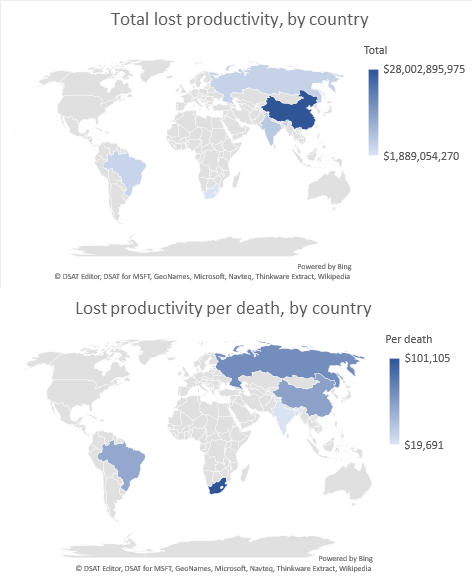
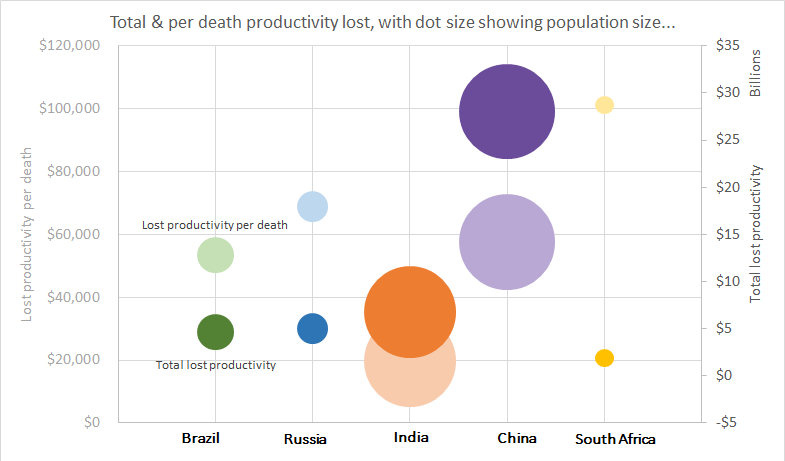
In a paper to be published in the journal Cancer Epidemiology we show that the total cost of lost productivity due to premature cancer mortality in Brazil, Russia, India, China and South Africa, collectively known as the BRICS countries, was $46.3 billion in 2012 (the most recent year for which cancer data was available for all these nations).

The largest loss was in China ($28 billion), while South Africa had the highest cost per cancer death ($101,000).

The BRICS countries are diverse but have been grouped by economists and others because of their particularly rapid demographic and economic growth. Currently the five countries combined comprise over 40% of the world’s population and 25% of global gross domestic product.

Liver and lung cancers had the largest impact on total lost productivity across the BRICS countries due to their high incidence, our research found.

But in South Africa, there are high productivity losses per death due to AIDS-related Kaposi sarcoma – an indication of the magnitude of the HIV/AIDS epidemic in Sub-Saharan Africa, and in India, lip and oral cancers dominated due to the prevalence of chewing tobacco there.

Many cancers which result in high lost productivity in the BRICS countries are amenable to prevention, early detection or treatment. Sadly, and in contrast to developed countries, most developing countries do not have such programs.

In particular, tobacco- and infection-related cancers (such as liver, cervical, stomach cancers and Kaposi sarcoma) were major contributors to productivity losses across BRICS countries.

Beyond the evident public health impact, cancer also imposes economic costs on individuals and society. These costs include lost productivity — where society loses the contribution of an individual to the market economy because they died prematurely from cancer.

Valuing this lost production gives policy- and decision-makers an additional perspective when identifying priorities for cancer prevention and control. This is particularly important in developing economies, where workforce and productivity are key resources in ensuring sustained economic growth.

Developing economies often have different demography, exposure to cancer risk factors, and economic environments than developed countries – all of which could modify the economic impact of cancer.

Locally tailored strategies are required to reduce the economic burden of cancer in developing economies. Focussing on tobacco control, vaccination programs and cancer screening, combined with access to adequate treatment, could yield significant gains for both public health and economic performance of the BRICS countries.

Country specific results

Brazil:

  • In Brazil, lung cancer resulted in the greatest productivity losses ($0.5 billion in 2012), with $402 million in lost productivity each year due to tobacco smoking, although Brazil has recently implemented successful tobacco use reduction policies.
  • Rapidly growing rates of obesity in Brazil result in up to $126 million in lost productivity due to cancer each year.

Russian Federation:

  • Total productivity lost due to cancer in the Russian Federation were $5 billion in 2012. They had the second highest cost per death of the BRICS countries.
  • Both liver and head and neck cancers contribute to the high number of excess alcohol-related deaths in the Russian Federation, with a likely considerably economic impact.

India:

  • Lip and oral cancers dominate lost productivity in India due to the relatively high prevalence of chewing tobacco. The use of smokeless tobacco, often combined with betel quid, may account for lost productivity of $486 million each year.
  • In India, the lost productivity costs per death of leukaemia are relatively high, perhaps because the advanced, multi-modality treatments required are not available, or are difficult to access

China:

  • Productivity lost due to cancer in China was $26 billion in 2012, more than all the other BRICS countries combined.
  • Two-thirds of total lost productivity costs in China were in urban areas (66%), considerably more than the proportion of people who reside in urban areas (52%).
  • In China, dietary aflatoxins in many staple foods is a major risk factor for liver cancer, and our results suggest this costs the economy $972 million annually.

South Africa:

  • In South Africa there are high productivity losses per death due to AIDS-related Kaposi sarcoma – an indication of the magnitude of the HIV/AIDS epidemic in Sub-Saharan Africa.
  • Cervical cancer represents a particularly large economic impact in South Africa. While there are new vaccinations available to prevent HPV, one of the precursors to cervical cancer, the effects of vaccination need a few decades to show impact. In the meantime, cervical cancer screening can offer an effective solution to reduce both the public health and economic burden of cervical cancer.

The reality of chemotherapy side effects

My latest publication shows that over three-quarters of people having chemotherapy in New South Wales experience multiple side effects during their treatment, and for over 60% of people this included a serious side effect. These results confirm previous research that suggests side effects might be more common, and more serious, in clinical practice (ie ‘real life’) than reported in clinical trials.

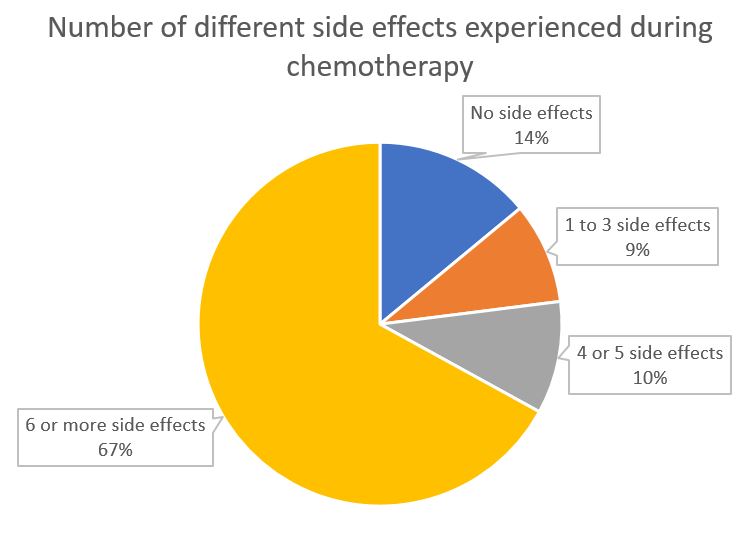
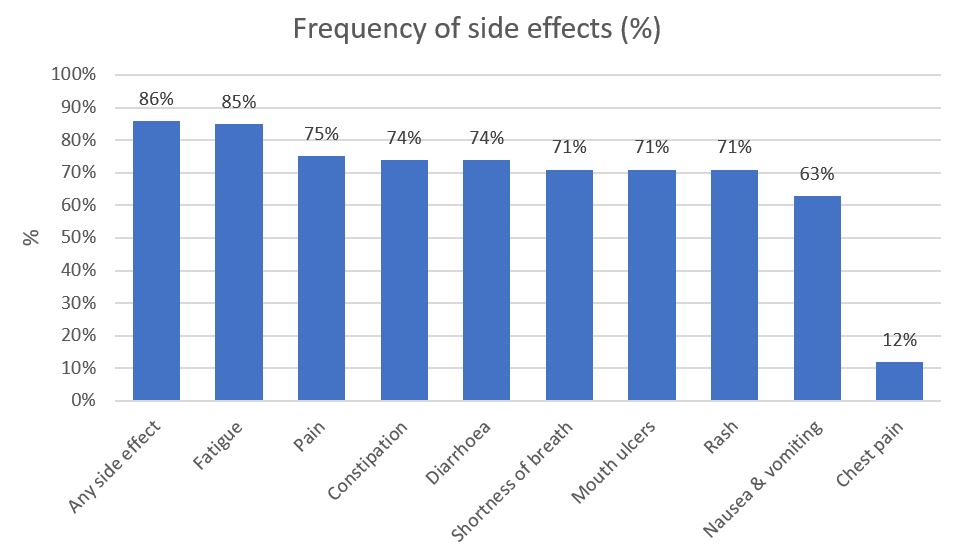
During their chemotherapy, 86% of our sample (who had lung, breast or colorectal cancer) reported at least one side effect, and 67% experienced six or more different side effects. Fatigue was the most common side effect (80%), followed by pain (75%), constipation (74%), and diarrhoea (74%). For nearly a quarter of participants (24%) the side effects were mild, but for many more (62%) the side effects were moderate or severe.

The number of different side effects experienced during chemotherapy
The number of different self-reported side effects experienced during chemotherapy by participants with lung, breast or colorectal cancer in the EOCC study

Older people in our sample were less likely to have a side effect. This is perhaps because older people tend to receive less aggressive treatments, despite this also possibly reducing how effective their chemotherapy is. Other things, like the type and stage of cancer, gender, education, and socioeconomic status did not change how likely a person was to have a side effect.

When we looked at the patterns of side effects over time, many people had mild side effects which stayed with them throughout their chemotherapy, especially constipation, diarrhoea, mucositis and nausea / vomiting. There was also a particularly large proportion of people reporting serious fatigue throughout their treatment.

The frequency of side effects
The frequency of side effects self-reported side effects experienced during chemotherapy by participants with lung, breast or colorectal cancer in the EOCC study

The first study of this type in Australia, our Elements of Cancer Care study followed 441 people with breast, lung and colorectal cancer having chemotherapy in New South Wales. We interviewed them each month during their chemotherapy treatment to ask them about a wide range of topics, including what side effects they’d experienced and how serious they were. We also collected information from their medical records at the hospital and with Medicare.

Side effects in real life vs clinical trials

When new chemotherapy treatments are developed, the side effects they cause are tested in research studies called clinical trials. Doctors, patients and policy makers then base their decisions about chemotherapy on the data from these clinical trials.

But, what happens in clinical trials does not always reflect what happens in real life. Clinical trials usually have very strict criteria for who can participate. Clinical trial participants are usually younger and fitter than typical cancer patients, and so be more able to cope physically with chemotherapy and therefore less likely to have a side effect. In addition, clinical trials are usually conducted in large, high-quality, teaching hospitals with extra monitoring and treatment of side effects, which may reduce how often they occur, or how serious they become.

Asking patients about side effects

How patients are asked about side effects can also influence what they report. When doctors or nurses ask general questions like “how have you been feeling” or “have you had any side effects” patients might not remember or report all of their side effects, particularly if they are not still happening. We gave participants a checklist of side effects, which may have encouraged them to report a greater variety of side effects, and those side effects which were less severe. This is a technique which could be implemented by doctors and nurses in cancer care clinics.

What does this mean?

On top of dealing with a diagnosis of cancer and being treated with chemotherapy, having side effects can affect someone’s physical health, survival, quality of life and emotional state. Because our information comes from real life, rather than clinical trials, it allows doctors, nurses, policy makers and patients to think more realistically about the side effects of chemotherapy.


Full reference (Open Access): Pearce A, Haas M, Viney R, Pearson SA, Haywood P, Brown C, Ward R (2017). Incidence and severity of self-reported chemotherapy side effects in routine care: A prospective cohort study. PLOS One 12(10): e0184360

The Elements of Cancer Care study was funded by the National Health and Medical Research Council (Health Services Research Grant ID 455366). Alison was supported by a University of Technology Sydney Doctoral Scholarship, and a PhD top-up scholarship from NHMRC Health Services Research Grant (ID455366). Sallie is supported by a Cancer Institute NSW Career Development Fellowship (ID: 12/CDF/2-25). No funding organisation had any role in the study design, data collection and analysis, decision to publish or preparation of the manuscript.

Cancer deaths to cost Ireland €73 billion over the next 20 years

A paper I worked on at the National Cancer Registry Ireland has been published in the journal BMC Cancer. Together with my collaborators, we estimated that deaths from cancer over the next 20 years will cost the Irish economy €73 billion in lost productivity.

When people die from cancer, society loses their contribution to the economy through paid work, housework, caring for relatives and volunteering. There will be 233,000 deaths from cancer in Ireland between 2011 and 2030. We found that these deaths will result in lost productivity valued at €73 billion; €13 billion in lost paid work and €60 billion in lost unpaid activities. This is almost double the lost productivity from cardiovascular disease in Ireland.

Lung, colorectal and breast cancer were the most expensive cancers overall, because they are the most common. However, when the number of people effected was taken into account, cancers of the testes, cervix and brain were the most expensive because they affect younger people who are often working. We know cancer places a large burden on individual patients and their families. This work shows that there is also a burden for the Irish economy. By estimating how much productivity is lost because of cancer we can inform policy makers and health services about priorities for cancer care and research in the future.

The study found that if Ireland could reduce cancer deaths by 1% per year then the economy would save €8.5 billion over 20 years. The authors suggest that a 1% reduction in cancer deaths could be achieved through improved treatments, reducing smoking rates, and ongoing participation in screening programs for breast, colon, and cervical cancer, as well as the roll out of the HPV vaccine.

The National Cancer Registry Ireland collects data on cancer incidence, treatment and survival in Ireland. They carry out research, such as this work, to help improve cancer outcomes and reduce the cancer burden in Ireland.

Our respondents didn’t understand these questions – do you?

Dr Alison Pearce has won a Best Poster Presentation Award at the Health Economics Study Group Winter Meeting 2016 (HESG) held in Manchester in January 2016. The award was given for Alison’s poster “Our respondents didn’t understand these questions – do you? Cognitive interviewing highlights unanticipated decision making in a discrete choice experiment.”

The poster described 17 interviews Alison conducted with cancer survivors about their care after finishing cancer treatment. During the interviews each survivor completed a survey about their care, but many found it very difficult.  Some of the problems with the survey are explained on the poster, but the poster was also interactive – conference attendees were asked to vote and comment on the survey questions. The poster received a great response, with many conference attendees voting and leaving comments about the research.

The National Cancer Registry is leading this research into cancer survivorship with a group of collaborators from Aberdeen, Dublin and Newcastle, with the aim of informing policy about the best way to structure follow-up services for survivors who have completed their cancer treatment. The Health Economics Study Group supports and promotes the work of health economists and is the oldest and one of the largest of its type.

This news article was originally posted on the 26th of January 2016 on the National Cancer Registry Ireland website: http://www.ncri.ie/news/article/registry-health-economist-wins-best-poster-presentation-award-recent-conference